
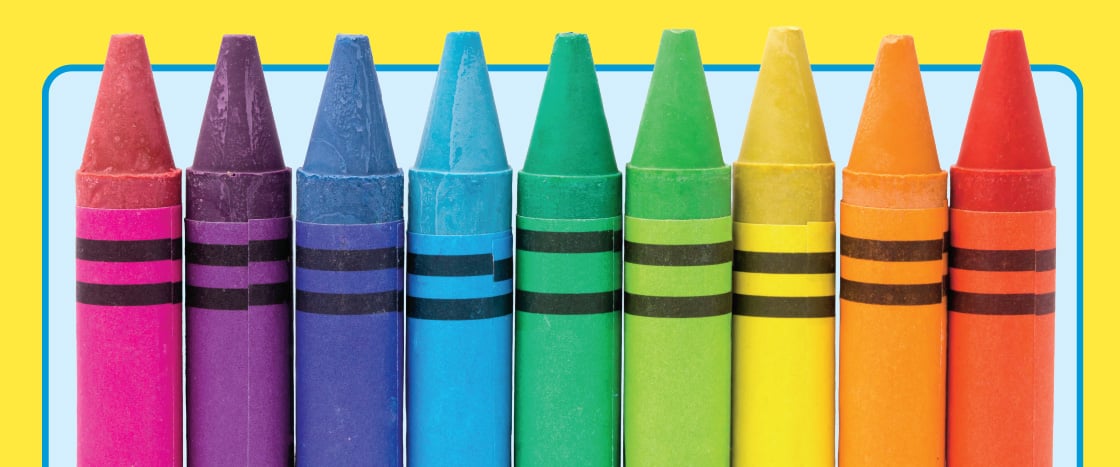

A row of crayons in rainbow colors stand upright side by side
Shutterstock.com

The History of Crayons

By Molly Bradley
From the September 2026 Issue

LEARNING OBJECTIVE: Students will discuss the sequence of events in a nonfiction text, using language that pertains to time.

Lexile® measure: 500L
Featured Skill: Sequencing

Standards

When it’s time to draw, you can always count on crayons! Where did these colorful sticks come from?

About 200 years ago, people had many ways to make art. They had paint. They had colorful pastels. But paint could be messy. Pastels were soft and hard to hold.

In the 1820s, a man in France decided to create a new art tool. He made his tool by mixing wax with colors.

He called his tool a crayon. It was easy to use. It wasn’t messy. Crayons were born!


Crayola Crayons

Shutterstock.com
 

In the early 1900s, two Americans decided to make their own crayons. Their names were Edwin Binney and Harold Smith.

The first crayons they made were black. Then they made colorful crayons. Edwin’s wife, Alice, named them Crayola crayons.

Crayola crayons were not expensive. That meant many people could buy them. Their colors were fun and bright. They were vibrant. Children loved them!

The first box of Crayola crayons had eight colors. Soon Crayola made more colors and bigger boxes. By 1958, you could buy a box of crayons in 64 different shades!

Crayons Today

Today you can find crayons in almost any classroom. They come in hundreds of colors. You can even find shiny metallic crayons and crayons in glowing neon colors!

Crayon Timeline

Shutterstock.com
 

1820s: The first wax crayons

National Museum of American History, Smithsonian Institution
 

1903: Crayola crayons

Museum of Play (Glow, Glitter); Matt Rourke/AP Images (64 Box)
 

Today: All kinds of crayons!

video (1)
Slideshows (1)
Activities (2) Download All Quizzes and Activities
Answer Key (1)
Text-to-Speech