

Article
Art by Shane Rebenschied

The Last Days of the Dinosaurs

By Alessandra Potenza
From the February 2026 Issue

Learning Objective: Students will gather information from the article to write an explanatory text about how the dinosaurs died out.

Lexile® measure: 570L
Featured Skill: Retelling

Standards

Download and Print
Think and Read

As you read, think about how scientists learned what happened to the dinosaurs.

It was a day like any other day.

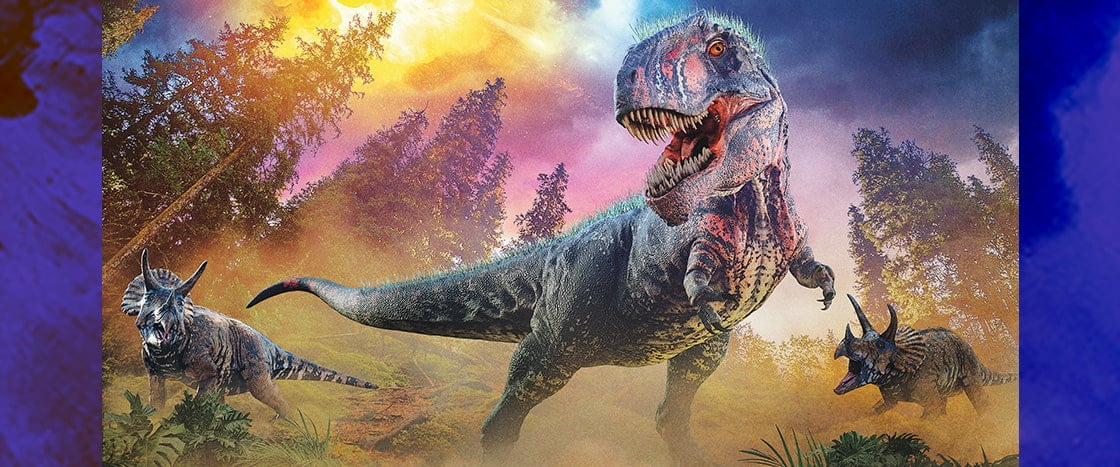
The sun rose in the sky. A huge creature stomped through the trees. It had short arms and sharp claws. This was a Tyrannosaurus rex (or T. rex), the scariest of all the dinosaurs on the planet. It growled and showed its 60 pointy teeth.

    Suddenly, the ground began to shake. Burning rocks started falling from the sky. The air got so hot that the trees burst into flames.

Eventually, the ground stopped shaking. The fires went out. 

But in just a few years, the T. rex and almost every other dinosaur were dead.  

That was 66 million years ago. What happened?

It was a day like any other day.

The sun was high in the sky. A large creature walked through the trees. It had short arms. It had sharp claws. This was a Tyrannosaurus rex (or T. rex). It was the scariest of all the dinosaurs. It growled. It showed its 60 pointy teeth.

Suddenly, the ground began to shake. Rocks started falling from the sky. They were on fire. Trees burst into flames because the air was so hot.

Eventually, the ground stopped shaking. The fires went out. A few years passed. The T. rex and almost every other dinosaur were dead.

That was 66 million years ago. What happened?



The Dinosaur Mystery

The Dinosaur Mystery

subhed

Before that day, dinosaurs had roamed the earth for millions of years. There were all kinds of dinosaurs walking around!

There were dinosaurs with long necks stretching into the trees. There were dinosaurs with horns on their heads. There were dinosaurs as heavy as a school bus! Smaller animals made sure to stay out of their way.

How do we know all of this? People have found many dinosaur fossils in the ground. Fossils are what is left of plants and animals from many, many years ago. That means that long ago, there were dinosaurs on the planet. Now there are none.

For a long time, no one knew what happened to the dinosaurs. But the fossils held a big clue.

Before that day, there were all kinds of dinosaurs walking around! Dinosaurs had roamed the earth for millions of years. 

There were dinosaurs with long necks. They could reach into the trees. There were dinosaurs with horns on their heads. There were dinosaurs as heavy as a school bus! Smaller animals stayed out of their way.

How do we know all of this? People have found many dinosaur fossils in the ground. Fossils are what is left of plants and animals from many, many years ago. The fossils show that there were dinosaurs on the planet. Now there are none.

For a long time, no one knew what happened to the dinosaurs. But the fossils held a big clue.


An Important Clue 

An Important Clue 

JOHN CARROZZA

 This is what the layers of rock and clay looked like.

In the 1970s, an American scientist named Walter Alvarez was studying rocks. He saw a layer of rock with fossils from the time of the dinosaurs. He saw a layer above it with almost no fossils. That was from after the dinosaurs died out.

Then he saw a thin strip of clay between the layers. What was it?

Walter asked his father, Luis, for help. Luis was also a scientist. They tested the clay.

The clay was full of a kind of metal. There’s not much of this metal on our planet. But there’s a lot of it in space rocks.

The Alvarezes had an idea. Maybe a giant space rock had hit Earth. Could that have been what killed the dinosaurs?

It was the 1970s. An American scientist named Walter Alvarez was studying rocks. He saw a layer of rock with fossils. It was from the time of the dinosaurs. Then he looked at the layer above it. There were almost no fossils. That was from after the dinosaurs died out. 

Then he saw a thin layer of clay between the layers. What was it?

Walter asked his father, Luis, for help. Luis was also a scientist. They tested the clay.

The clay was full of a kind of metal. There’s not much of this metal on our planet. It is found in space rocks.

The Alvarezes had an idea. Maybe a giant space rock had hit Earth. Could that have been what killed the dinosaurs?


A Big Discovery 

A Big Discovery 

MACIEJ FROLOW/GETTY IMAGES

Walter and Luis thought that a space rock had hit Earth. 

Walter and Luis published their idea. Now other scientists could read about it.

People were shocked. A giant space rock killing the dinosaurs? No one had ever thought of that!

Soon scientists started finding the space metal in layers of rock all over the world. More people started to agree with Walter and Luis’s idea.

Finally, the biggest clue of all was discovered. It was a huge crater. A crater is a large hole in the earth. It was found under the sea near Mexico. Only a really huge space rock could have made that crater!

Walter and Luis wrote about it. They published their idea. Now other scientists could read about their idea.

People were surprised. A giant space rock killing the dinosaurs? No one had ever thought of that!

Soon scientists started finding the space metal in layers of rock all over the world. People started to think Walter and Luis’s idea was right.

Then the biggest clue of all was found. It was a huge crater. A crater is a large hole in the earth. It was found near Mexico. It was under the sea. Only a giant space rock could have made that crater!


Mystery Solved!

Mystery Solved!

Now scientists understood what had happened. 

One day 66 million years ago, a space rock called an asteroid hit Earth. It hit very hard. It killed everything around it. It caused earthquakes and fires.

The air filled with dust from the asteroid landing. It filled with ash from the fires. The ash and dust covered the planet like a blanket. They blocked the sunlight. The planet was dark for years. Plants couldn’t grow. As a result, many animals died. The age of the dinosaurs was over.

But after a few years, the sky cleared and the sun came out. Plants began to grow again. Over thousands of years, the planet healed.

There was no T. rex in this new world. But some other animals had survived. 

Crocodiles, snakes, turtles, and small mammals all survived. They had hidden underground, in caves, and in ponds. Now they roamed the earth. They didn’t have to worry about dinosaurs.

What would the world be like if that asteroid had never come? Maybe we would be sharing the world with dinosaurs. 

Now scientists knew what had happened.

One day 66 million years ago, a space rock called an asteroid hit Earth. It hit very hard. It killed everything around it. It caused earthquakes. It caused fires.

The air filled with dust. There was ash in the air from the fires. The ash and dust covered the planet like a blanket. They blocked the sunlight. The planet was dark for years. Plants couldn’t grow. Many animals died. The time of the dinosaurs was over.

After a few years, the sky cleared. The sun came out. Plants began to grow again. Over thousands of years, the planet healed.

There was no T. rex in this new world. But some other animals had survived.

Crocodiles, snakes, turtles, and small mammals all survived. They had hidden underground. Or they hid in caves and ponds. Now they walked the earth. They didn’t have to worry about dinosaurs.

What would the world be like if that asteroid had never come? Maybe we would be sharing the world with dinosaurs. 


SHUTTERSTOCK.COM (ALL IMAGES)

Animals like opossums, crocodiles, turtles, and platypuses survived.  

How a Fossil Forms

How a Fossil Forms

It can take millions of years for a fossil to form.

It can take millions of years for a fossil to form.

Step 1

An animal like a T. rex dies. Its skeleton gets buried under water, mud, or rocks.

Step 1

An animal like a T. rex dies. Its skeleton gets buried under water, mud, or rocks.

Step 2

Over time, the skeleton hardens into a fossil.

Step 2

Over time, the skeleton hardens into a fossil.

Shutterstock.com (all images)
 

Step 3

Eventually, the water dries up. Some of the dirt wears away. People can now find the fossil.

Step 3

An animal like a T. rex dies. Its skeleton gets buried under water, mud, or rocks.

video (1)
Slideshows (1)
Activities (4)
Answer Key (1)
video (1)
Slideshows (1)
Activities (4) Download All Quizzes and Activities
Answer Key (1)
Text-to-Speech